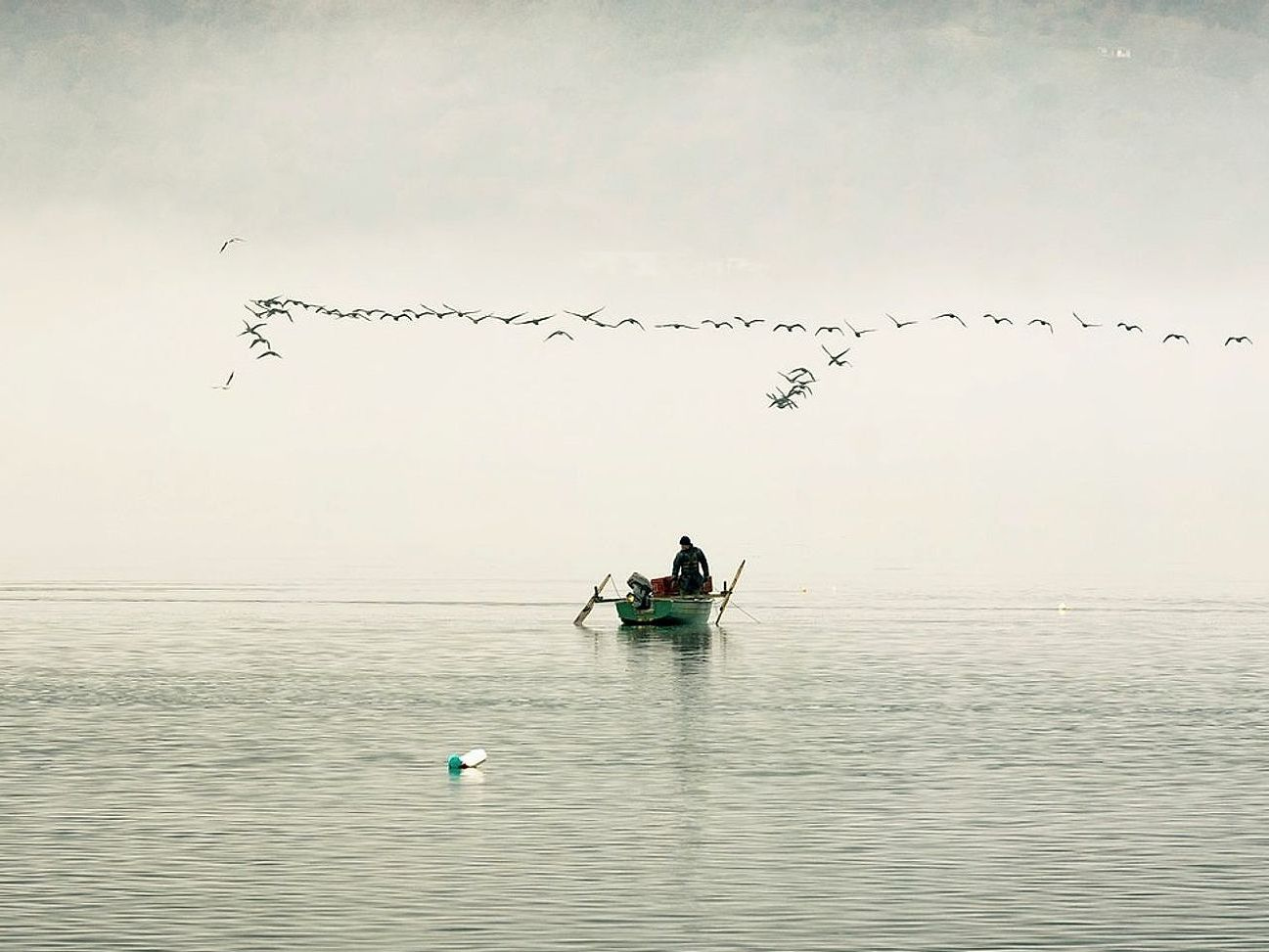
There's a stretch of early morning on the ice that belongs to almost nobody but the regulars. It starts about an hour before first light and ends the moment the sun actually clears the tree line. Anyone who has drilled through eight inches of ice in that window will tell you the same thing: the bite you get before sunrise is rarely matched later in the day, and it's the reason half our fishing community sets alarms for four in the morning all winter long.
The ice is never quiet before dawn
The first surprise for newcomers is how much there is to hear out there before light. With no view to rely on, the ear takes over — ice groaning somewhere out past the pressure ridge, the wind picking up as the lake opens out, the faint scrape of someone else's auger a few hundred yards off. Anglers who normally move from hole to hole in a hurry find themselves standing still, listening, for no reason they could explain back at the shack.
None of it is mysterious. Sound travels further over frozen water than almost anywhere else, and there's nothing else out there competing with it. Knowing the reason doesn't make it any less unsettling the first time a shot of cracking ice echoes clean across the bay.
The second surprise is how well you learn to read the lake without much light at all. Give it twenty minutes out there and most regulars can pick a safe line across the ice by the contrast between snow cover and open patches. The trick locals pass down is not to stare straight at a dark patch — look slightly to the side of it, and ice conditions show up far more clearly in your peripheral vision.
There's a limit, and it's worth being straight about it. On a heavy overcast night with no moon, you can't judge ice by eye at all, and the sensible move is to drill a test hole and check thickness before you trust another step. Nobody in this fishing community hands out points for walking onto ice you haven't checked.
What a dawn trip asks of you
Getting out earlier than feels reasonable, for one. One more layer than you think you need, because the cold on open ice before sunrise cuts deeper than anything at midday. And a route onto the lake you already know well, since first light is not the moment to find out whether last week's ice has held.
Also: tell someone which lake you're fishing and when you expect to be back. This one habit separates anglers who do this for decades from the ones who quit after one bad scare. It costs nothing, and it's the single thing that turns a dangerous morning on the ice into just a long one.
Beyond that it doesn't ask for much. A headlamp you keep off until you need it, a thermos of something hot, and enough time that you're not watching the clock between drops. The whole point is to get your lines in early and let the lake do the rest.
You don't head out onto the ice to watch the sun come up. You head out to have your jig already in the water when the perch decide to start biting.
Then the bite turns on
It never happens all at once, and rarely where you expect. Long before anything shows over the horizon, the lake starts separating itself out — the far shoreline, then the shape of the point, then the fact that the snow has gone from blue-grey to white. The flashers start showing marks again before you can even see your bobber clearly.
There's a short window, maybe fifteen or twenty minutes, right as the sun clears the tree line, when the bite goes from slow taps to steady action across every hole on the lake. Then it eases off, the sun climbs, and the morning settles back into ordinary jigging.
The temptation now is to grab a phone and photograph every fish before it goes back down the hole, and there's nothing wrong with that — our catch reports run on exactly those photos. But almost everyone says the same thing afterward: the picture is fine, it's just not the thing. No photo holds the twenty minutes of standing in the cold waiting for that first flag to trip.
Heading back out
The slow mornings matter too. Flat grey skies, a wind that makes standing on open ice miserable, two hours of jigging for nothing worth writing into the catch report — these are what make the good days stand out. Without the skunked trips the whole season blurs into one long outing.
Fish the same lake often enough and the mornings stop feeling interchangeable. You start to recognize, from the look of the sky on the drive up, which ones will turn into a good perch bite and which won't — and you're wrong often enough to keep coming back. The real reason has little to do with the fish: for one hour before the lake fills up with other sleds, nothing is asked of you except to watch your line.

Mira K. fishes more mornings than is reasonable between November and March, and has been compiling this community's catch reports since our very first season.